
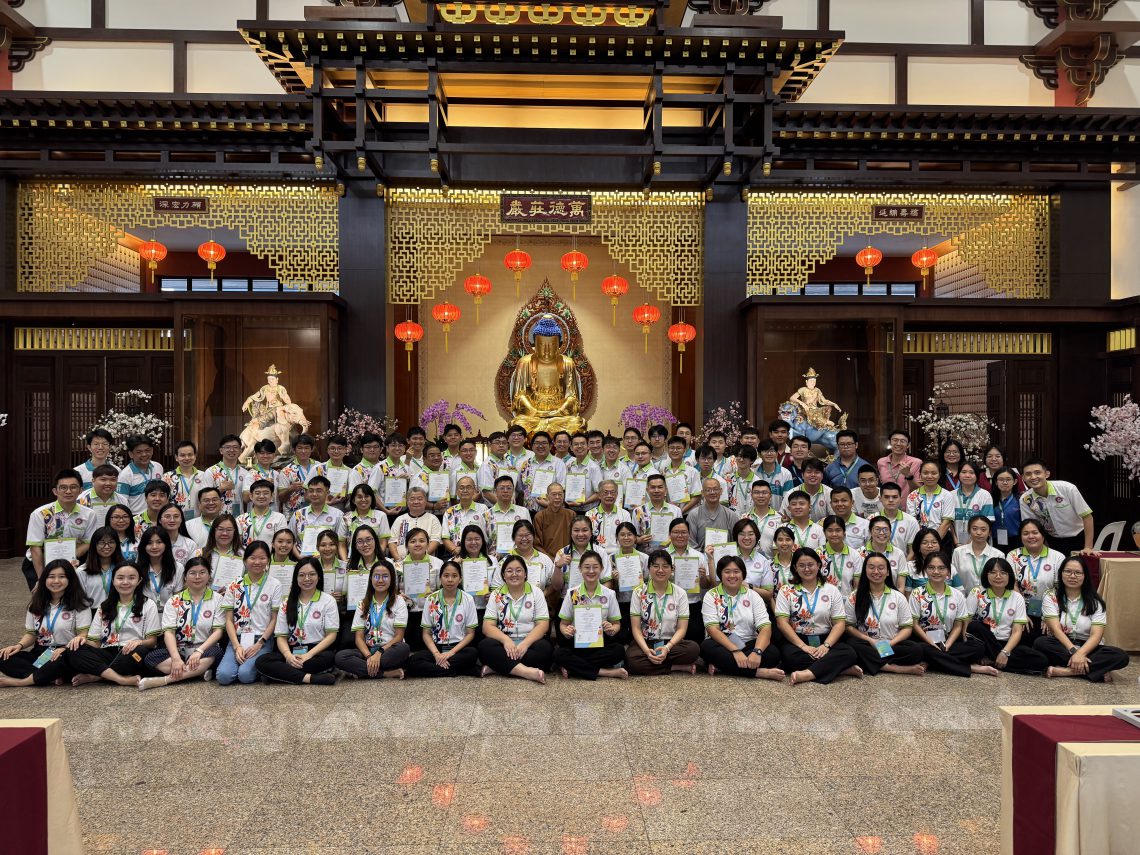
The Young Buddhist Association of Malaysia (YBAM) held its 28th National Council Induction Training and Pledge-Taking Ceremony from 2 to 3 August 2025 at Hoeh Beng Buddhist Temple. Around 100 members from 13 State Liaison Committees and 9 Standing Committees across the country took part in the two-day, one-night training programme.
The first day of the training commenced with ‘The Power of Vows and Action of Buddhist Practitioners.’ In this session, the Religious Advisor of YBAM, Ven. Chuan Wen, emphasised that, as Buddhist practitioners, it was essential to be clear about YBAM’s vision- to shape a society of wisdom, compassion, and gratitude, and its mission- to unite the strength of Buddhist youth and inspire in them wisdom, compassion, and gratitude. Ven. Chuan Wen particularly pointed out that making vows is only the first step; what is more important is transforming these aspirations into concrete action.
Following this, YBAM General Secretary Dr Ng Hui Chen gave a detailed explanation of YBAM’s organisational structure and operational framework. She likened the Secretariat to the ‘heart’ of the organisation, highlighting its essential role in coordinating with the State Liaison Committees and Standing Committees. In response to the demands of an increasingly digital era, Dr Ng Hui Chen shared strategies on utilising AI tools to improve administrative efficiency, while also cautioning committee members to be discerning, as AI-generated content may contain inaccuracies.
The final session of the first day was conducted by YBAM Treasurer Kon Hua En, who introduced the association’s financial management system. He provided a clear explanation tailored to state-level treasurers, outlining how to ensure a more systematic and accountable approach to financial operations within the organisation.
The second day commenced with a solemn pledge-taking ceremony. In the presence of Religious Advisor Ven. Chuan Wen, YBAM President Yong Kuei Yoong led the 28th National Council in the recitation of their vows of office. After the ceremony, YBAM Lay Advisors Leong Kok Hing and Liau Kok Meng shared their insights in a session titled ‘Core Values of YBAM and the Altitude of Its Office-Bearers’.
Liau Kok Meng recalled the successful Contemporary Buddhist Seminar held in the year 2000, which attracted over 2,000 participants, including government officials. He highlighted that YBAM’s emphasis on both Chinese and English set it apart from other Buddhist organisations, and thus urged committee members to improve their bilingual abilities. By doing so, he explained, they would not only be effective within Chinese-speaking communities but would also be able to engage meaningfully with English-speaking Buddhist organisations and networks.
Leong Kok Hing encouraged the newly inducted committee members to act with boldness and initiative. He remarked, ‘With action comes the possibility of success. Without action, success will never be possible.’
The training concluded with a session by Deputy President Dr Tan Chan Sin, who elaborated on the three key focus areas of YBAM’s 8th Six-Year Plan: Systematising Training, Communitising Buddhism, and Technologising Dharma Propagation. Using interactive games, Dr Tan Chan Sin presented these strategic directions in a lively and engaging manner, demonstrating how these concepts could be translated into future planning and implementation.
Through five tightly connected sessions, the Induction Training enabled the national council and committee members to gain a comprehensive understanding of YBAM’s values, operational approach, and long-term vision.
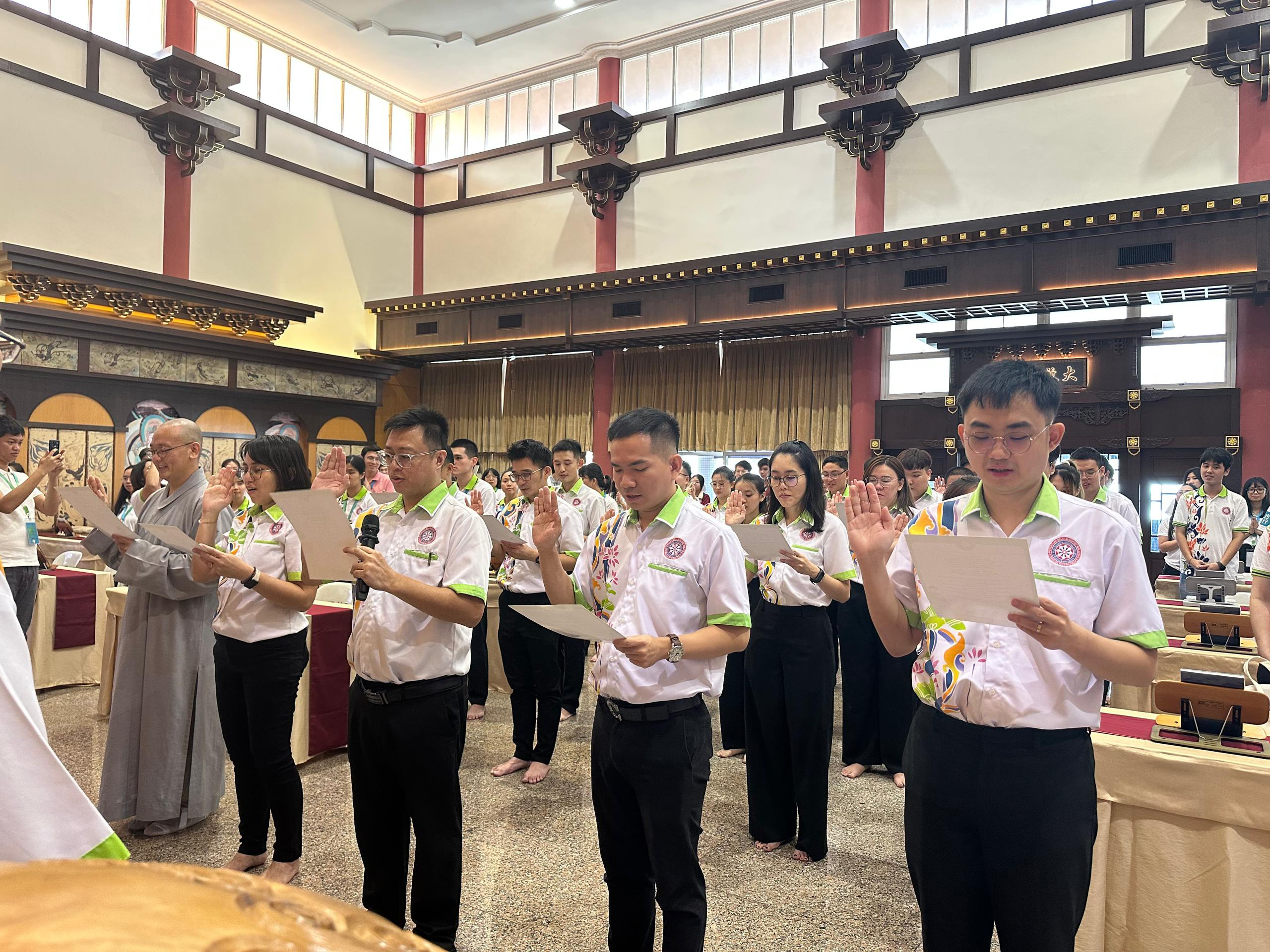 YBAM President Yong Kuei Yoong(third from the right)led the induction Pledge-Taking Ceremony of the 28th National Council.
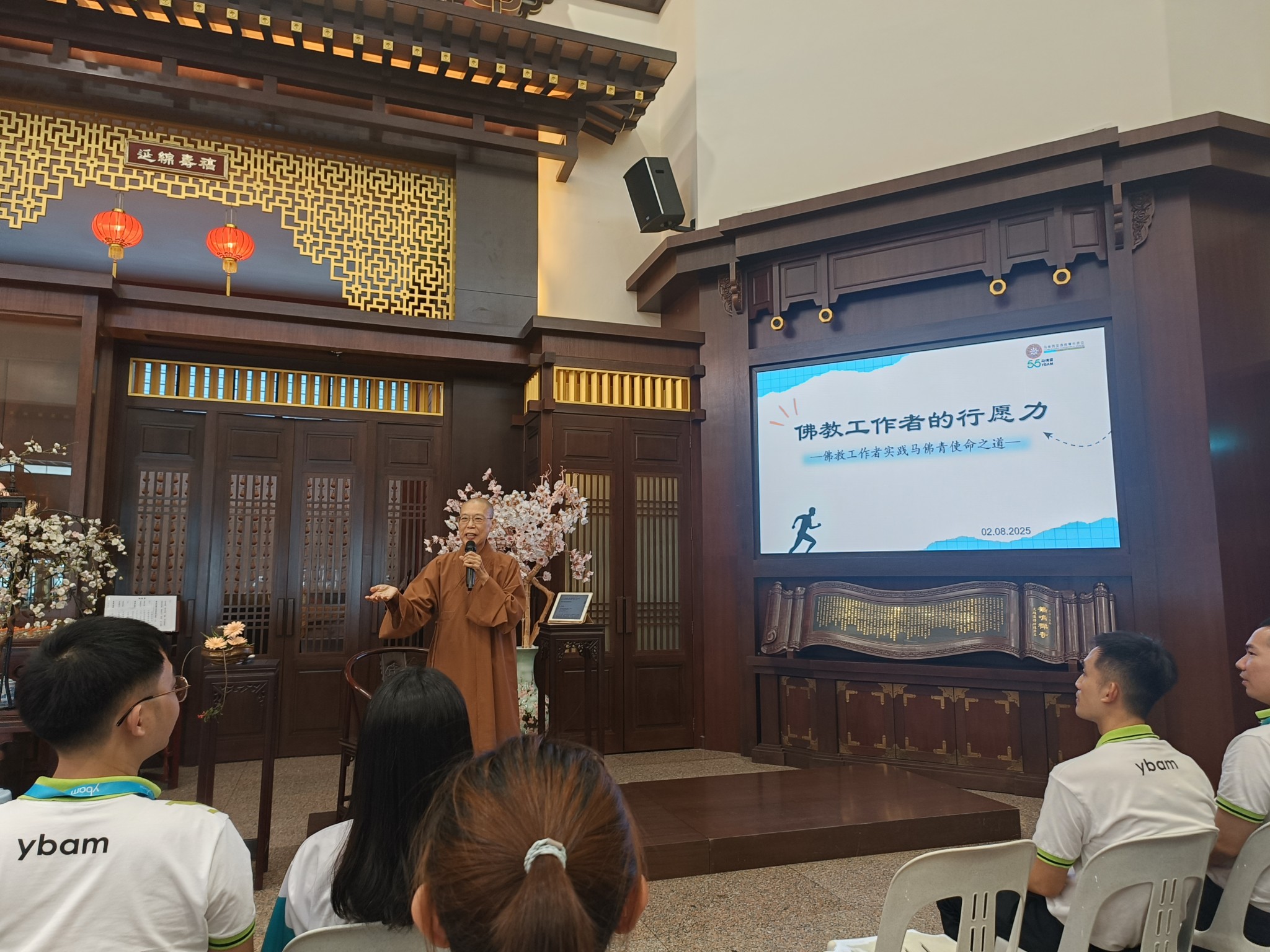 Session (1) The Power of Vows and Action of Buddhist Practitioners.
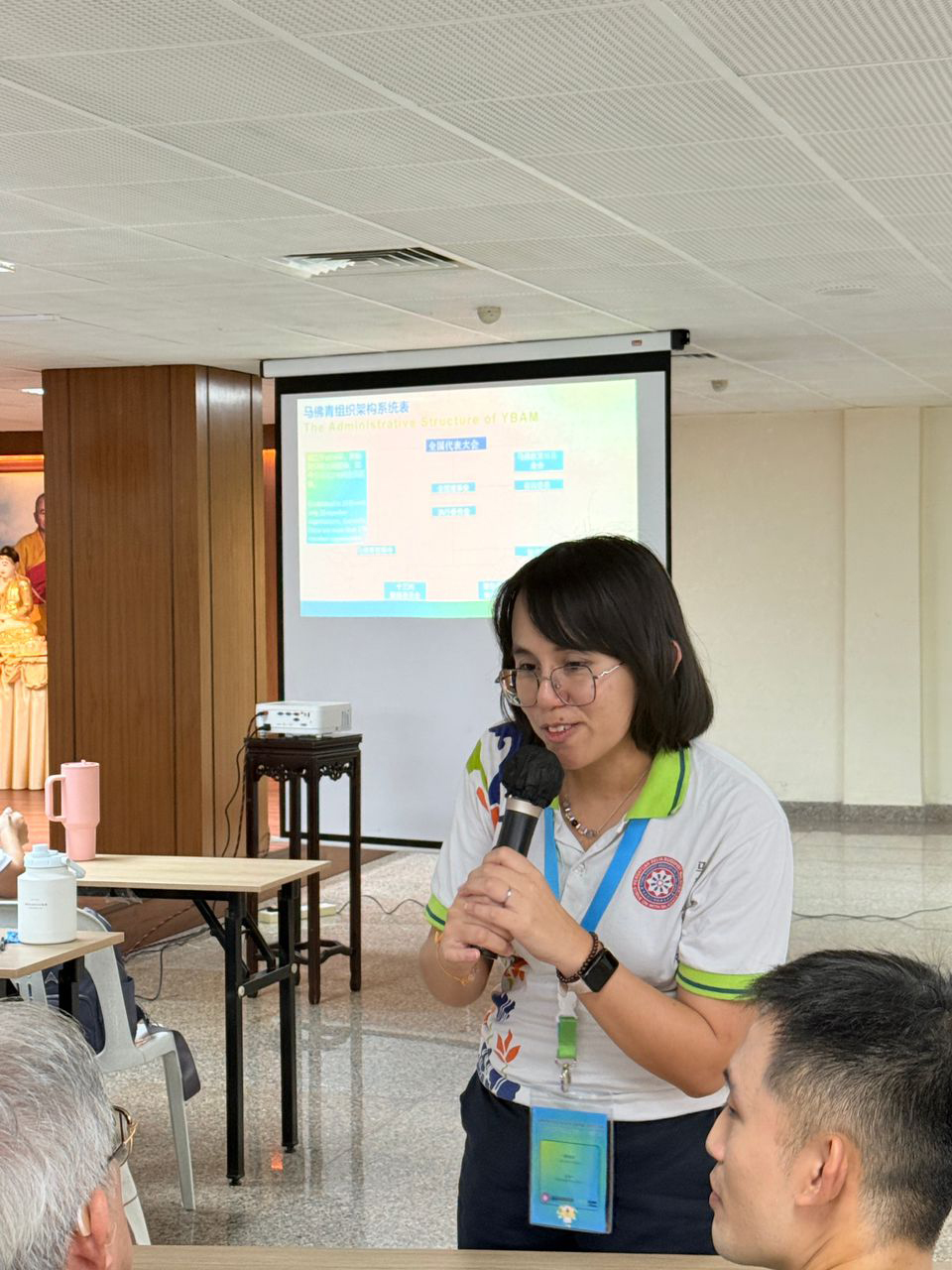 Session (2) Organisational Structure of YBAM, YBAM Secretariat and Administrative Procedure Workshop.
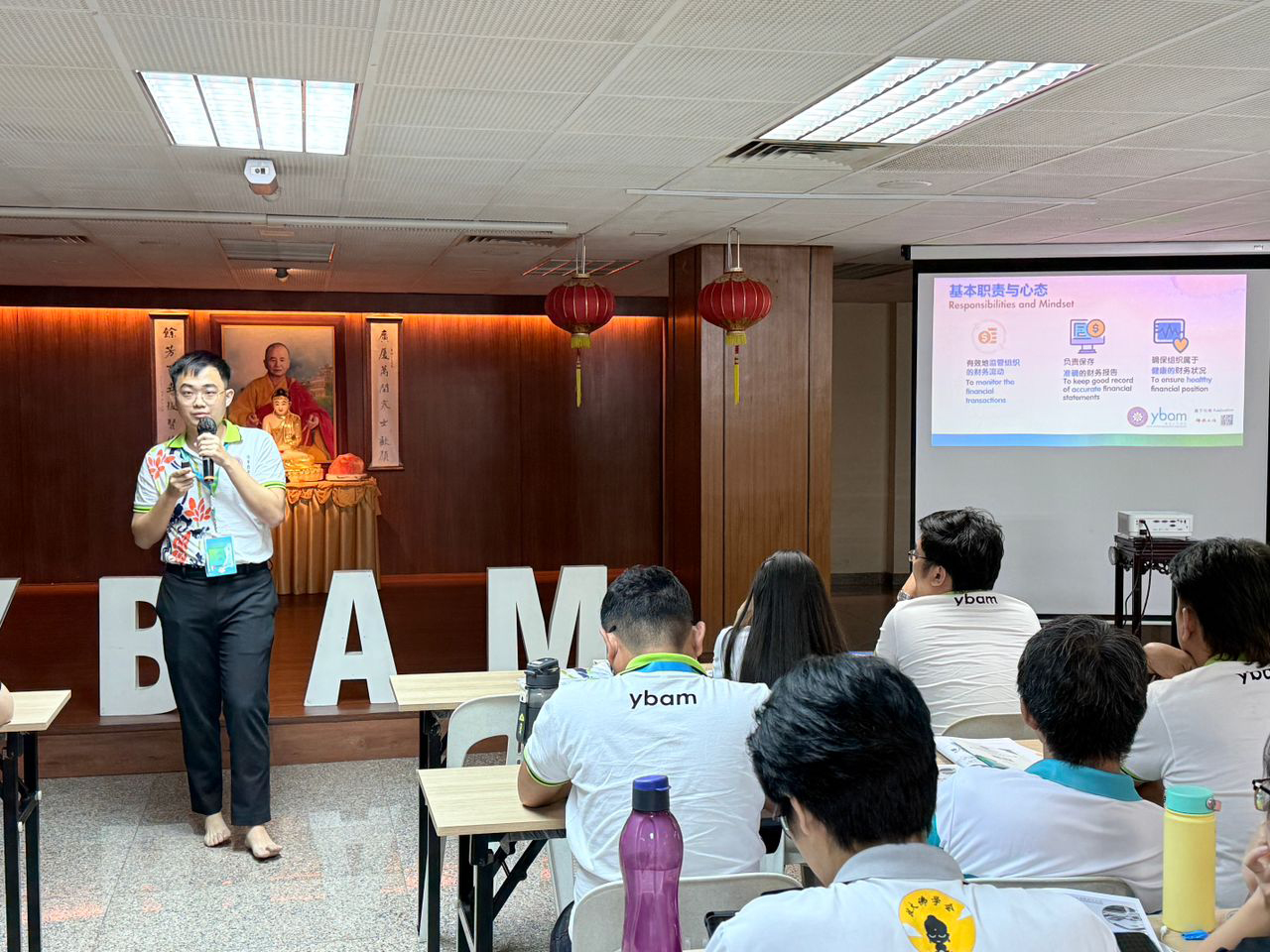 Session (3) Financial Management Workshop.
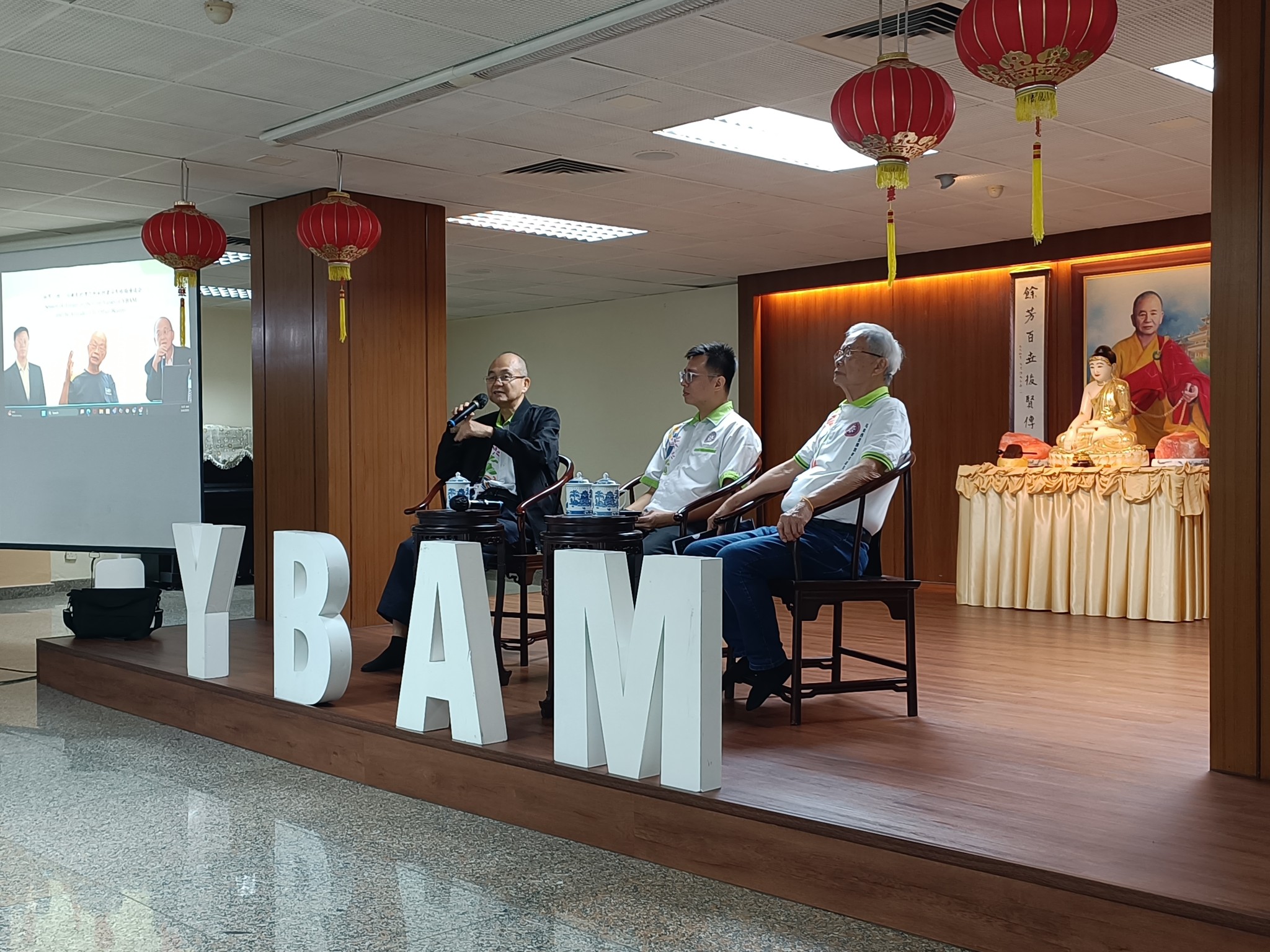 Session (4) Forum on the Core Values of YBAM and the Altitude of Its Office-Bearers.
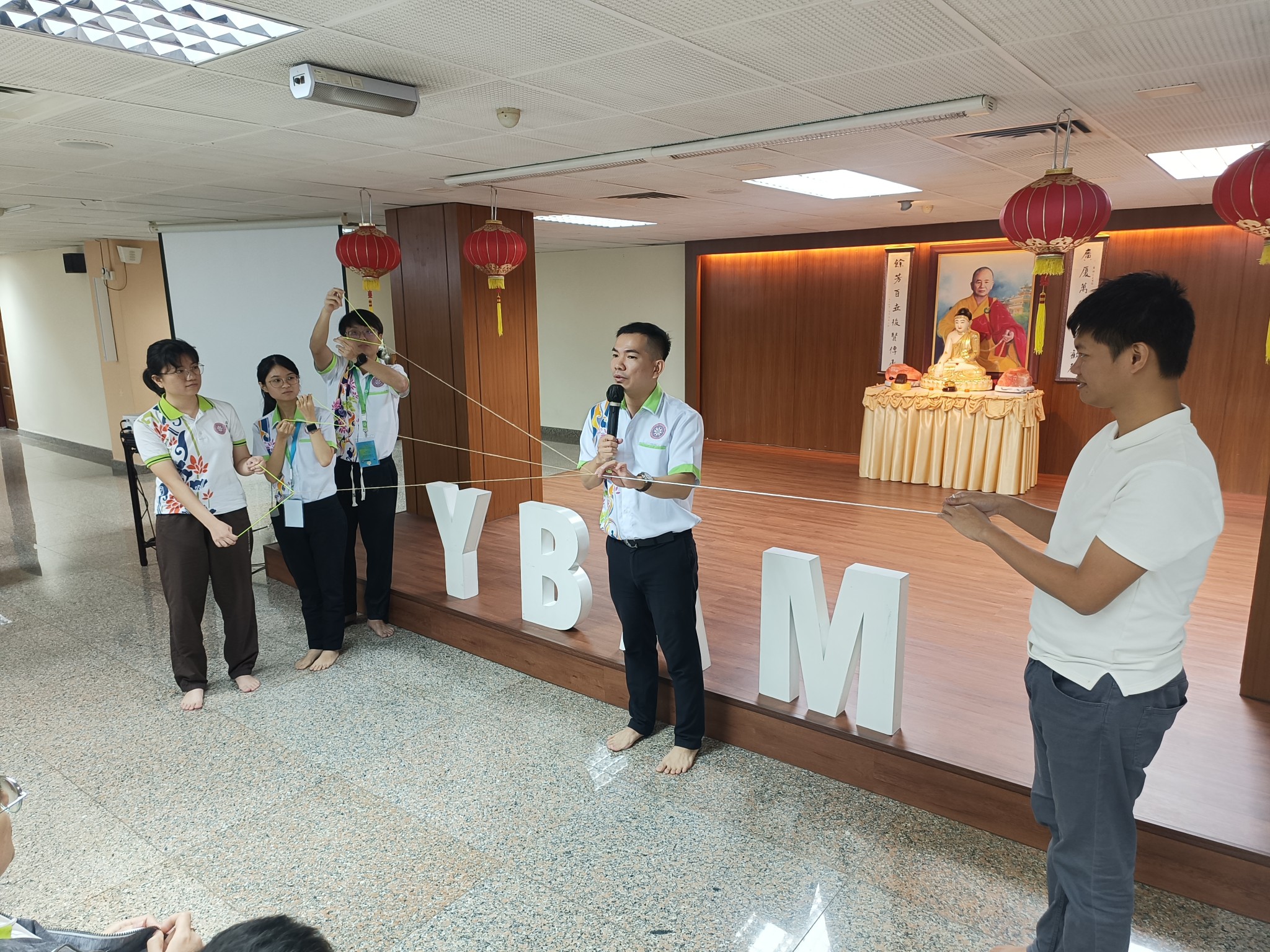 Session (5) Implementation and Involvement in the 8th Six-Year Plan.
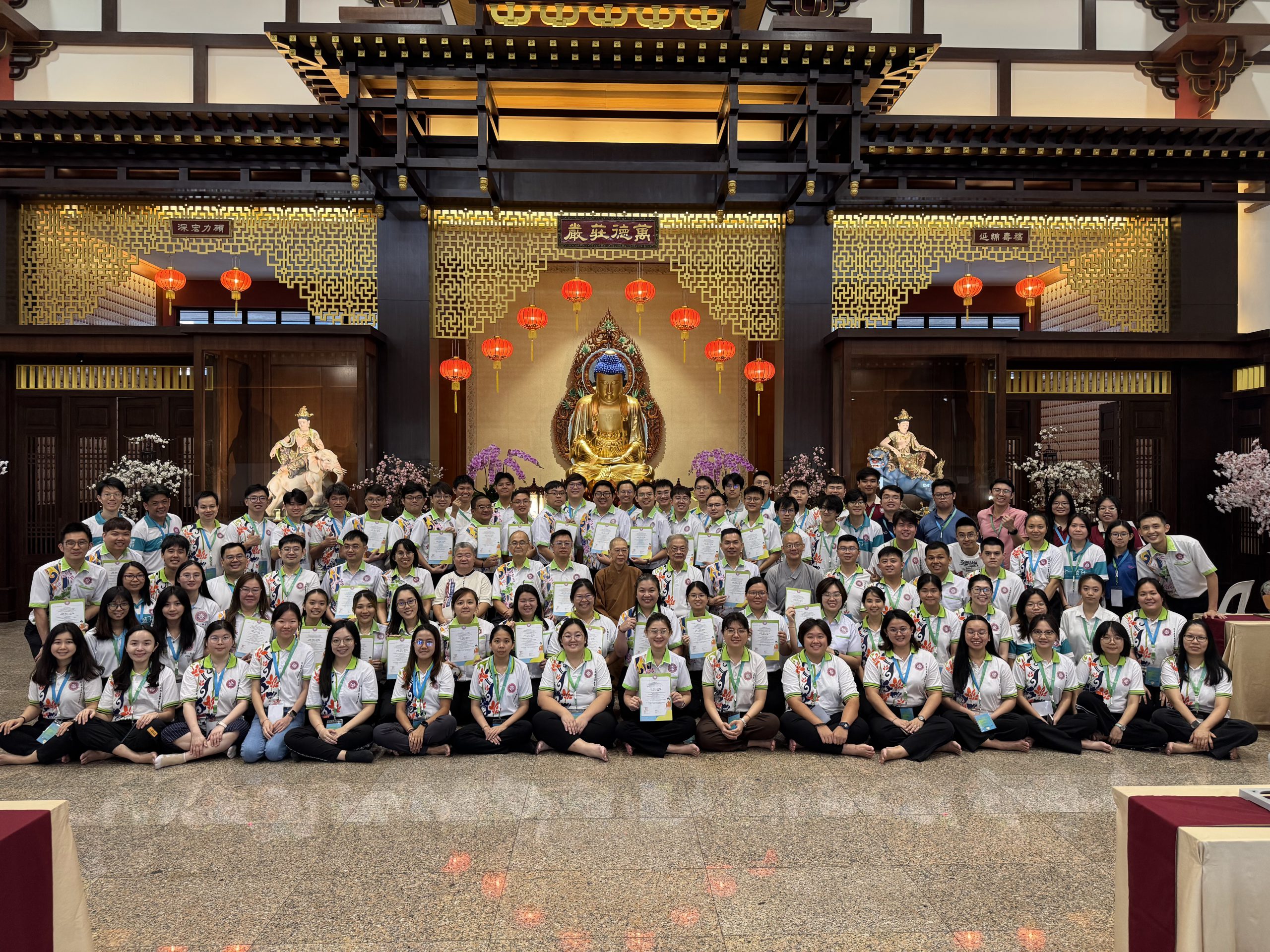 Group photo
